Tuesday, March 18

Games Developers Conference - San Francisco


A little late, but here are my thoughts on the GDC conference I attended back in February.

One of the first things I noticed was the lack of Flash Lite content at the event. Adobe had a small stand during the mobile conference, which gained some attention from delegates, but I was disappointed that none of the speakers were from Adobe, nor that there was any key figures from the Flash Lite world speaking at the event. There were plenty of people talking about Flash Lite, and whenever it was mentioned; at least people had heard of it, which is contrary to events I’d been to over the last few years. However although it was on people’s radars, no-one talked about using it on current projects, or had any immediate plans to do so either.

There weren’t any really exciting revelations, or new thinking that I heard. There is certainly lots of scope for improvements in the mobile industry, but progress appears to be slow and difficult for all those involved. The industry in Korea is a lot more mature that the US and Europe, and this was made even more apparent with a speaker from ... who joyfully spoke about a number of projects they have worked on. I realised how far we have yet to go, when models that are only pipe dreams in the US are already second nature to the industry in Korea such as complex social multiplayer gaming and micro transactions.

Distribution and porting were the two most discussed topics over the course of the event, unfortunately with little being said on what the solutions might be for developers. Porting is an ever increasing issue, with more and more devices available, and the insistence of carriers to support all devices. The estimated costs of porting pretty much double the initial development costs for a game, and it doesn’t look like improving any time soon. Everyone is fed up with this situation, and yet as an industry we continue to follow this route blindly where there is clearly an opportunity for a disruptive change in this field. Obviously Flash has an advantage here, and as we reach a milestone of ½ billion Flash Lite devices shipped, and with Microsoft signing to ship Flash Lite on Windows Mobile devices, this advantage is always increasing.

Advertising was probably the third topic of choice, with the general consensus not being very positive to the money making potential for a sustainable business model. The large cost of development for current games has a negative impact on the ability to offset this with advertising alone. However this may be different in the casual space, it will have to been seen.

One thing that concerned me was that the mobile industry appears to be heading for a very hard core gaming audience, looking at advanced graphics, and complex 3D game play. Coming from the console industry I have seen what this means for an industry, and it isn’t necessarily a good thing. It worries me a little that we haven’t learnt anything from the success of the Wii, and the casual games, especially as the mobile platform has the potential to reach a much wider audience than consoles due to its penetration. However with download statistics at measly figures like 6% of mobile owners downloading a game it is worrying that as an industry we are targeting even a small percentage of this market with future technologies.

I believe that there is still a strong case for disruptive technologies in the mobile space, that either revolutionise the gaming experience or the distribution and from what I’ve seen Flash Lite has this potential. In the mean time, there is definitely the opportunity for companies to do conversions from current Java based games into Flash, whilst the Java development studios haven’t got the capabilities to do this in house.

Another point of mention is the undeveloped area of position aware and social games that are being developed. This seems like a very under tapped market and has huge opportunities for developers. This area has been talked about for years, and yet the most interesting games I have come across are Geotracking, with a bit of storytelling behind them, not exactly revolutionary.

Overall the Conference didn’t have much of a buzz about it, which was probably due to there not being many major announcements and the consoles being mid cycle. The two major areas of the main conference that were receiving a lot of interest were input devices and motion capture. Input was a hot topic on a number of fronts, including the Wii Fit, numerous different controller systems and even a mind reading controller. Mobile had its revelation, the Zeemote. This is a Bluetooth analogue controller for mobiles, which has great potential, but again it’s positioned to the hard core games, not the casual market. Other interesting mobile development lie in the areas of using the camera, accelerometers and touch screens for better input solutions, and as long as they are used in the right kind of applications, they offer plenty of opportunities. There were plenty of stands promoting motion capture all competing on ease of setup and cost, with some very cost effective solutions now available.

It was a really interesting conference, and I got to meet some great people. There is a lot of hope for the mobile industry, and I hope over the coming years we will see some fantastic developments and advances that really open the space up for more universal and disruptive mobile games and applications.


Saturday, March 8

Home to Kansas

Travelled back to Kansas for my three month internship at SoftVu LLC with the brilliant Tim Donnelly, founder and president.

I'm really looking forward to the experience and hoping to absorb as much from Tim as I can over the next few months.


Thursday, March 6

IDEO - Redesigning the World

IDEO, based in Cambridge are a world renowned design agency with a reputation for their approach and working environment. We heard from their team about their approach and got a deeper understanding on their design principles and why there have been so successful.

The whole structure of IDEO is built to let ideas flow and create an environment for innovation and new concepts to flourish. It appeared to be a combination of employing the right people (one employee had around 8 interviews), the space and the resources they have available.
The Cambridge office was chosen specifically because it of its situation between Harvard and MIT, and it was interesting to hear the wide variety of people they have employed from areas as diverse as anthropologists to accountants. All work in a very flat structure, with teams changing on a per project bases, with team leads picked for their skills, not their experience at the company.
I am very interesting in learning more about the IDEO approach, and have already ordered two of their renowned design books, with the hope of learning about how to create a similar working environment for my ventures.

It was a fascinating afternoon at the IDEO offices, and it was a shame we couldn’t spend more time there.


MIT 100K Competition

I had the chance to attend the Semi-Final ceremony for the MIT 100K Business Plan Contest, which has outgrown its name and actually has prizes in the 100's of thousands across the various tracks.

This huge event in on of the large halls on the MIT campus featured a keynote speach from Johnathan Seelig the co-founder of Akamai and now managing director of Globespan. Interestingly he's also on the board of Zipcar, the founder Robin we met earlier in the week.

It was a great event from a number of perspectives. Firstly it was huge, with a good few hundred in attendance, showing the calibre of the competition and how popular the hard working volanteer students who run the event have made it.

Also Johnathan was a great speaker, and interestingly he re-presented his original pitch for Akamai from 10 years previous when he had entered the then 10K competition. Although a finalist, he didn't win the competition, and was the first to admit the flaws in his presenation. It was interesting to see how the business model has evolved, and how their original plans changed over time.

Unfortunately it will be a while until competitions such as Blueprint reach this size and stature, but at least they are heading in the right direction.


Wednesday, March 5

Negotiation

Today we had a workshop from Melissa Manwaring from Harvard Business School on negotiation and how to prepare for a negotiation situation. It was interesting to hear a detailed discussion on negotiation as it’s not something that I’d spent much time on previously, and certainly was surprised about how different a negotiation can be depending on how it is approached.

We were given seven key areas in a negotiation that you should have information on, and know where you stand on each area, but importantly also try and understand where your negotiation partner also stands. These areas are Interests, Options, Legitimacy, Alternatives, Communication, Relationship and Commitment. Depending on the negotiation, different areas can have more importance. It is often good to be aware when you are in a negotiation, which of the areas the discussion currently sits in, and that way you can make a better decision on how to steer the negotiation in a better way.

The seven elements are a way to analyze a negotiation situation with more strategy than just looking at it as a bartering, back and forth argument. By opening yourself up to new ideas in a negotiation, you can often forge a better outcome for all involved, or rescue a negotiation that looks lost.

The reading was really interesting, but also rather large and covered exactly the same topics as were discussed in the workshop. This made the workshop a little tedious, as it was clear we had a good understanding of the topic and found the day a little repetitive at times.

The workshop was great experience and has already proved useful in practical terms, and will hopefully serve to improve future negotiations that I will inevitably have.


Tuesday, March 4

FIRST Robotics

After the DEKA visit, we visited the FIRST Robotics building, and saw firsthand the exciting ways in which they are using robotic challenges to introduce school children to engineering, teamwork and involve them in a worldwide competition.
The work that’s been carried out is amazing, and it’s a great initiative started by Dean Kaman and supported by various companies, including the Kauffman Foundation. It was great to see such dedication on the part of FIRST to improving the opportunities for hundreds of thousands of children. I was glad to hear so many companies have got involved and invest not only money, but time with the children.

I am intrigued by the way the FISRT Robotics events involve schools and children and am going to look into how to spread the reach of the completion to more schools in the UK. It is also interesting to hear that they are looking to make the event software based in the future so it would be great to get involved with that aspect as well.


DEKA

It was great to visit DEKA and have the chance to meet with Dean Kaman, the Founder. Dean gave us a large amount of his time to talk to us about DEKA, and his experiences in various projects.

The experience of hearing first hand from Dean, and learning about his passion for design, and pushing the boundaries of innovation and technologies was motivating. Although Dean went to university, he didn’t graduate, but not because he didn’t use the time wisely. In fact, instead of attending lectures and seminars, he simply made use of the faculty staff for the 5 years he was there and used them on a one to one basis to learn directly from them, understanding that this was a lot more valuable than regular classes.
I respect Dean’s approach to business, with the attitude of succeeding by raising the bar rather than pushing others under it, which is one of the reasons DEKA has been so successful in inventing new technologies that disrupt markets.
It was also interesting to hear about the projects they are working on, such as the iBot, the electric wheelchair with the balancing technology better known being used in the Segway. Amusingly Dean described the Segway as the iBot with all the complex technology taken out. Also seeing the work they are doing on a lightweight arm that is revolutionizing prosthetic limbs.

It was fantastic to visit DEKA and see the facilities they have, and the way the organization is structured. They are doing some fantastic things there and continue to push the boundaries on what’s technically possible.


Monday, March 3

MIT

We were welcomed by the MIT crowd, and it was good to hear from current students about their experiences at Sloan. They certainly work hard, and I was staggered to find out how much they get involved with activities in and outside of the school. It was a great atmosphere at MIT, and the social activities were great.

The 100K was a huge event and I’m glad that I attended the ceremony. The scale of the venture was a big shock and it was great to hear how involved the students are in the organization. To hear Jonathan Seelig, the founder of Akamai, one of the biggest internet services speak was a great opportunity. Especially to hear how far he had come since he had entered the then 10K competition 10 years ago. For Jonathan to give the same presentation that he gave at the beginning of his company was very interesting because it was obvious how much has changed since then, although he always has aspirations to be a large company, I’m just not sure he thought quite so large.

It was a shame that the evening pizza event wasn’t more organized and hosted at a better venue with more of the students available to meet with us. It seemed that the event clashed with two very high profile events for Sloan students, which limited its attendance greatly.


Tabula Digita

Ntiedo Etuk (Nt), CEO of Tabula Digita, spent an afternoon with us, openly discussing his experience in starting up a successful educational gaming company. He was extremely honest about his journey, and it was refreshing to hear from him. I was impressed with his dedication and drive to succeed, which was very inspirational.

Nt had a number of important lessons to share relating to his story, but it was his overall ambition and dedication that was most apparent to me. On a number of occasions Nt was in a position that I think a lot of people would have given up and thrown in the towel. However Nt pushed through these tough times, believing in himself and his company and has proved to have been a wise choice. He’s proved successful at raising capital, and also breaking into the very difficult educational system with his fantastic mathematics based educational multiplayer games.

I really enjoyed hearing from Nt and wish him all the luck in the future. I hope that I have the opportunity to work together on some interesting projects in the future.


Friday, February 29

Synectics

Rick Harriman from Synectics provided us with a seminar on how to think about the creative process, and different approaches to idea generation and problem solving. It was interesting to hear the Synectics approach, as it went a lot further than simply brainstorming and focused more on different ways of looking at the situation, and triggering ideas from alternative areas to the problem.

It was great to learn new techniques regarding idea generation and there were a number that will be useful for the future, such as the principle that just by thinking harder about a problem, won’t necessarily get you much further down the innovation route, there are other levels that you must build on such as analogies, diversity and absurdity are useful tools to utilize.

The interactive nature of the session was useful, and it was good to work through the tools in a real situation to see how they could be used to rethink a problem within the teams we had.

Rick provided a useful session and it was good to hear the alternative strategies to brain storming.


Changing the world with Robin Chase - GoLoCo

It was great to hear from Robin Chase as she spoke so passionately about her past and future projects. She had a lot of useful insights into her ventures and ways in which we could apply some of her knowledge in our own entrepreneurial activities. I was amazed to hear about how bold and forward thinking Robin is in the way she looks to negotiate areas and fields that she doesn’t necessarily have a background in, but wishes to revolutionize those industries with disruptive thinking. I would definitely describe Robin as a serial entrepreneur, as not only has she started successful ventures such as ZipCar and GoLoCo but also hitting out into Mesh Networking and congestion charging.

Robin talked openly about different aspects of entrepreneurship and touched on a number of areas. She mentioned that you need to know how to satisfy the small amount of new users in a beta test when working with networks of people. Her approach is to satisfy the small, before organically growing to the large. This approach has been proved a success from the monster his such as Google and Facebook, so she can’t be too far wrong.

She also made it clear that if you are working at the intersection of two industries, then you can quickly become an “industry expert”, which is where Robin has often found herself, working with hi-tech, automotive, environmental and networking solutions.

Her opinion on making sure mesh networking devices become successful and well accepted is to integrate them into other technologies that are well maintained and required. That way the mesh network will be kept running because it is necessary by another solution, such as within cities for use in congestion charging.

A sound piece of advice is to try and hire people who have an “I can do that attitude”, this generally means a team of entrepreneurs. I can see issues with this, if there isn’t a common focus of the company, and everyone is working towards the same goals. Along with this attitude another thing that you usually can group entrepreneurs under is the thinking of, “It’s always looking up”, a great way to think about things, obviously as long as it’s actually looking up!

When asked how to go about asking people for advice, and to be on your board as a new entrepreneur, Robin suggested that successful people generally come from a place where they feel people have helped them, so are will to help others be successful too. A great way of thinking about things, and from my experience this is commonly true.

Robin was a great speaker, and we had an interesting discussion with her. It was also good to be able to debate some of the issues that she arose, and hear how she defended her position. I think Robin is doing a great job, and wish her all the success in the future. She really is changing the way people think about transportation and the environment at both the highest and lowest levels in the world.


Law, law, law

Our first talk of the day was from John Akula from MIT on the topics of law issues with employment, with focus on trade secrets, loyalty, non-competitive agreements through an interactive case study. John went through some of the issues that surround employment from a US perspective, which was interesting to hear. I was surprised most by the at-will contracts that are common in the US, where an employee can leave at any time, or can be let go at any time, without notice, or reason. Although there are many courteous reasons to give notice, this doesn’t have to be the case. This obviously has many implications for job security, and therefore affects areas such as loyalty and trade secrets.

There are many differences between both the laws and the cultures between the US and UK regarding employment law and areas such as non-competitive agreements. Having come from the games industry, where there is a lot of anxiety surrounding these areas, it was fascinating to hear another perspective on this. I was glad to hear that there are States, such as California that ban non-competitive agreements, and it seems to be a factor in the success of Silicon Valley.

The interactive workshop worked really well in this situation, on what could have been a very dry topic. However the interested case studies, along with the insights from the fellows, who all have a variety of backgrounds that they were able to bring to this area made it an enjoyable session.


Thursday, February 28

MIT Entrepreneurship Center

It was interesting to visit the MIT Entrepreneurship center as I could see how much weight MIT has put behind its entrepreneur focus. It’s not surprising they are considered one the best colleges for entrepreneurs, especially regarding their 100K competition when they have a center and dedicated staff at the university, even if it is only run by 5 strong full time team. The center being outside the remit of the other schools seemed to be an important aspect of the success, along with the strong alumni network MIT has.

We had an interesting discussion with Bill Aulet regarding business plans and how they could be successfully implemented as a PowerPoint presentation. If you are able to create a 10 slide version of your plan, that acts as a plan of execution for your business.

He also went through the areas that a 100k plan would be marked on, in the areas of opportunity and risk. These are:
• Market
• Execution
• Team
• Plan
• Competitive Advantage (tech)
• Financial
• Other i.e. Green energy, political implications (where appropriate)

Further details on this were that the market needs to be broken down into manageable steps, rather than looking at the market as a whole. The example was you can’t just say you’re going to sell cars to 1% of the market, need to look at it on a much smaller scale.

Gross margin is an important consideration, and something that hasn’t been touched on yet. Bill said that you need to be careful when presenting the margin, near to 10% is what a distributor has, and 90% is Microsoft, which is very difficult to achieve and would be hard to convince a panel, or VC that you could work with this percentage.

Competitive advantage is usually thought of as tech, but can also be critical mass of customers, or even having customers locked into your system. Having the best technology is not always necessary, and often overrated by the entrepreneur. Speaking of VC’s he warned that all they care about is Internal Rate of Return (IRR), it’s what they are rated on and the most important figure to them.

Once you have a plan, it should be signed by all management so that they are all in agreement with its contents, and are all dedicated to its success. The plan needs to convince a number of people that it will be successful. Intially this is you, then your team and also your customers. Finally your mother, meaning it should be easy to understand. At all times it should stir up passion and excitement, only then will it be ready for others to look at.

An invention on its own is like counterfeit money, it’s not worth anything until it’s commercialized!

Innovation = invention + commercialization


Even if there is no competition in the market, then you need to explain why. If there is no competition, this will flag warning messages in anyone’s head looking at the plan. It’s best to frame it as, even though there is no competition right now, you recognize there will be in the future. It’s also a bad idea to compare your new product with a product a competitor already has on the market, they will often have new products with your functionality in the works that you don’t know about. A better way to look at them is to find out what they are competing on, and differentiate yourself that way.

One thing I was disappointed with regarding the center is their concentration on graduate and PhD students for the programs and not undergraduates. One thing I have learnt since being on this fellowship is that you can never start too young in teaching entrepreneurial practices and if you are introducing the practices to school children, then the opportunities should also be there for all students. It was also interesting to hear that they haven’t achieved any increase in students that wish to pursue entrepreneurship who finish at MIT compared to when they start.

I don’t want to sound negative, but have a few other observations about the center. They rely on donations from local businesses and past students for funding, which account for 70% of the income. This doesn’t seem like a sustainable business model to me, and could suffer in the future. It also appeared that the classes were generally given by lecturers at the university, and they rarely used active businessmen.

It was great to hear from Bill again, he really is an inspiration and has so much knowledge and insights into the process we are all going through its scary. I would jump at the opportunity to spend more time with Bill and his team.


Wednesday, February 27

Y Combinator

I attended a Harvard School dinner this evening that discussed a start up incubator, Y Combinator started by Paul Graham that offers seed funding and mentoring for very early stage start ups.

It was great to hear from former participants in the incubator and hear first hand their stories and insights. It sounds like a fantastic opportunity for a business, and strangely for the US, the draw isn't really about the money (attendees get $5000 for each member of the team, and the business gets $5000 for a small percentage of the company) it's about the contacts and mentoring that are available through the programme.

There have been some hugely successful companies come out of this experience already, including Reddit and Justin.TV and more here.


Monday, February 25

Visit to Adobe

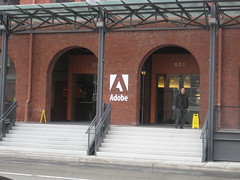
My last day in San Francisco and managed to organise a meeting at the Adobe Office in the centre of town. Their offices are very impressive, and looked like a pleasure to work in.
I met with Josh and Ryan from the mobile and design teams, and they were both extremely nice guys, and very open to a chat. We discussed various aspects of Flash Lite development; all agreed that the lack of Flash Lite at the GDC conference was very disappointing and the opportunities going forward for Flash on the mobile platform is really exciting.
I hope that Fluid Pixel can develop a working relationship with Adobe, as I believe it would be a pleasure to work for them, and it would be great to be an integral part of the Flash Lite, Flash Home and Flash Cast platforms going forward.
Obviously I can’t talk about some of the more interesting that we spoke about but let’s just say mobile Flash isn’t going away anytime soon!


Sunday, February 24

Brunch, Palo Alto Style

Today’s event was breakfast with the effervescent Peter Davies, along with his friend David Perry. David is a remarkable man, having been the CEO of the record braking company Chemdex. Chemdex was a company David started during the height of the internet bubble, and is a true example of how companies rose and fell so quickly. Started after leaving Harvard University, David single handily raised large sums of VC and took the company from nothing to worth $10 billion in less than 4 years, and then back to little over $100 million when he eventually sold it. I was in awe of the casual manner that David spoke about his experience as the youngest CEO to take a company to such a valuation and in one of the shortest periods in America’s history, only to lose nearly everything by the end.

He had a few insights into what his insights into how to be a successful entrepreneur that resonated with my experiences and beliefs. The first is to not worry so much about what it is you are doing as long as you fulfil 2 criteria. They are that you are always learning and you are enjoying what you are doing. This mantra is true whether or not you are perusing entrepreneurial activities, or working for a company. Whatever choices you make in this regard will work themselves out eventually, and there’s no reason you can’t move on in the future.

Secondly he outlined a perspective when raising capital that I hadn’t heard before, but was particularly interesting. His idea when making a pitch is not to skirt around potential barriers and risks, but rather spell them out and make the investor aware of everything you are aware of. His reasoning is that they will look for risks anyway, and if you leave them to their own devices they will probably come to the wrong conclusions. However the ingenious part is once you have outlined the obviously fantastic opportunity, then prepared them with the risks, instead of asking money to pursue the opportunity, you ask for the money to eliminate the risks. So if you identify the risks in order of priority, and necessity, and ask for X amount to overcome the top Y risks, you can show how strong the company will be at that stage, what the risks will then be (presumably a lot less) and therefore show how much investment will be required at that stage to continue to overcome the further risk. If done properly, you will organise the risks into stages, and at each stage it will become easier and easier to raise the capital required to overcome the risks (if necessary of course).

Finally he also warned about a situation that currently seems a long way off, and that is raising too much money! Apparently he has encountered the situation, and Peter also, where VC’s wish to invest a much larger amount of capital. This usually occurs when investor groups work together and all want a piece of the pie. In this situation, to support the higher valuation this causes, it is too easy to spread the company too thinly and work on products that aren’t core to your business, and therefore you can lose focus on the key areas. Not something that is immediately relevant perhaps, but something to think about nonetheless.

I really enjoyed the breakfast and it sounds like David is onto something equally impressive for his next venture, this time with the experience behind him, and having learnt a number of hard lessons. He has found a technology that could potentially revolutionise the way in which molecular treatments work, with the associated rewards, so it will be interesting to see how this venture fairs. I have no reason to believe that he won’t be a success.


Friday, February 22

Stanford Tech Licensing Office

Today we visited Stanford Tech Licensing Office for a discussion at one of the most successful technology transfer universities in the world.

It was interesting to see how Stanford, a model university for licensing manages its assets and handles IP. We were able to ask some touch questions and gain invaluable insights into how UK universities compare to Stanford.

We were told about the Stanford way, and that often the inventor isn’t the best person to take on the technology, if you look at the technology from a viewpoint of what’s best for it. This approach from Stanford is something I hadn’t heard mentioned previous to this, and a thought provoking statement. I will continue to see how other universities approach their IP and see if anyone approaches the experience and insight that Stanford has achieved. I will also try and work with Teesside to improve their Licensing model.

It was a very interesting session, and we could have been left debating the pros and cons of Stanford’s approach all day long!


Thursday, February 21

iRhythm

In the afternoon we a meeting with Uday Kumar from iRhythm, who have a revolutionary cardiac-rhythm monitoring device. Uday was very enthusiastic, and showed that even with no knowledge of the business world, it is possible to form a great team, and start up a successful company. His dedication showed, and it was an inspiring talk, especially as he is coming from a similar position to myself, with lots of specialist skills, but little business background.

I have learnt from Uday's first hand expereince that dedication, hard work and enthusiasm for your idea are a great place to base a business from. Along with a lot more hard work it is possible to start a business in a short space of time, and raise significant funding, and also build a team.

Uday was very inspiring and a businessman who is less than a year down the line from where I am now, so he had lots of relevant knowledge, albeit in another field. Overall he had the right mix of technology speak, with business insights and really inspired enthusism from me and the group.


Microsoft - San Jose

Visit to the Microsoft Offices in San Jose. It was very interesting to hear from inside Microsoft as to how they approach entrepreneurship and innovation from such a large company. It was new information to me, as I don’t feel Microsoft is particularly good about showing it’s innovation, compared to companies such as Google, even though in some respects they act in similar ways.

We have heard a lot recently about how difficult it is for large companies to continue to innovate and keep market share when there are new companies able to come in with disruptive technologies. Microsoft appears initially to be too large for this to occur, but it was clear from this talk that they are fully aware of the fragility of their market, and need to keep on innovating, either internally or externally through other companies, which they ultimately may or may not buy.

All in all it was a great session, it was just unfortunate that we didn’t have more time for the discussions to continue, and even more unfortunate that we didn’t have time for a full tour of the building.


Sunday, February 10

Monster Jam

We jumped at the chance to see the trucks at Monster Jam at the Sprint Center here in Kansas City.

It was a fantastic event, not only with huge monster trucks but also quad bikes and motorbikes.

It certainly wasn't for the feint hearted, these things are VERY noisy, adrenaline pumping machines.

Well worth the visit, and a great day out!